The Sydney issue
Salt and Ritual: Sydney's Ocean Pools and the Swimmers Who Meet the Sea at Dawn
A measured, honest guide to Sydney's tidal ocean pools — which ones earn the early alarm, which suit groups, and the one with a door policy you need to know before you go.

By Bram de VriesThe long way round Sydney — coastlines, ferries and the streets between
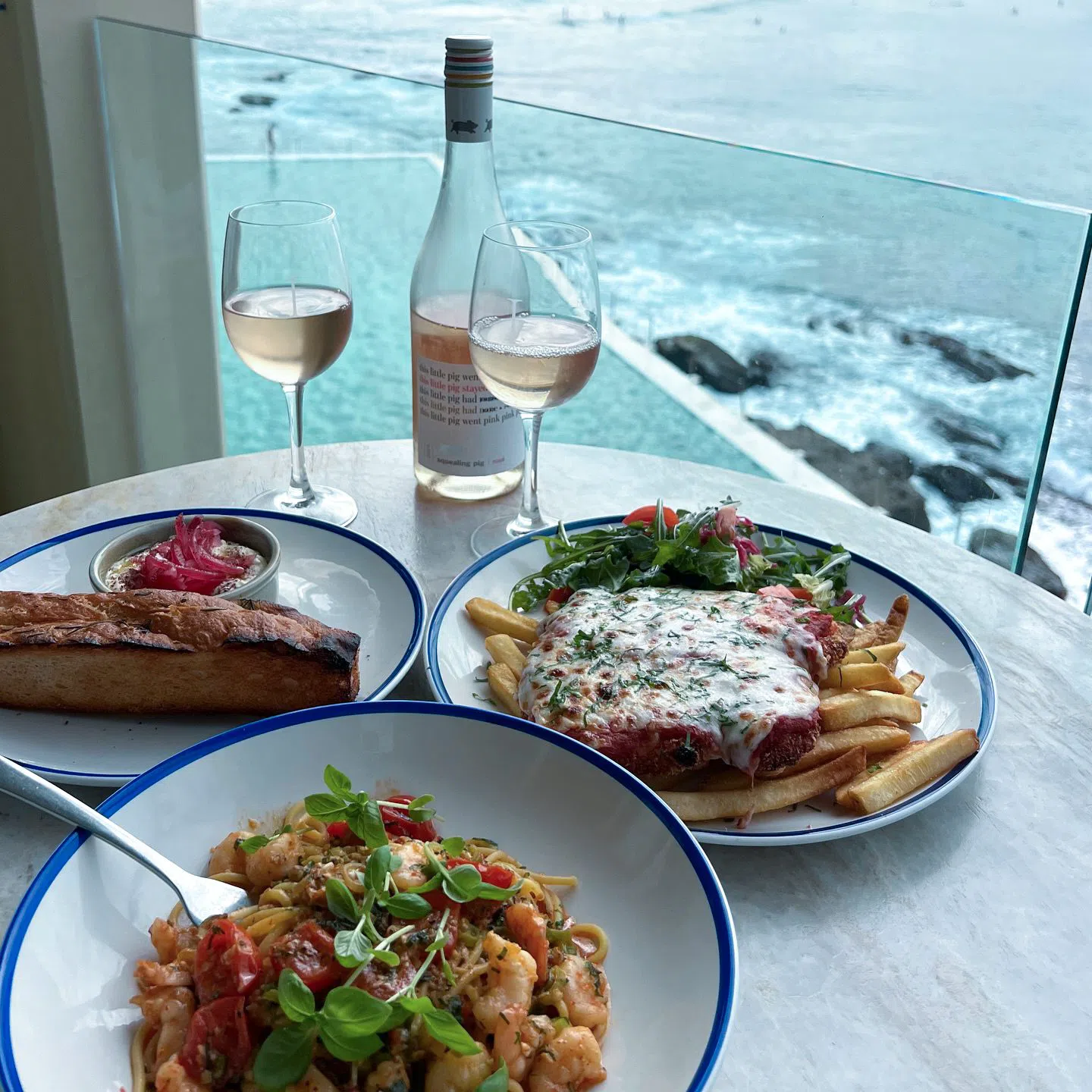
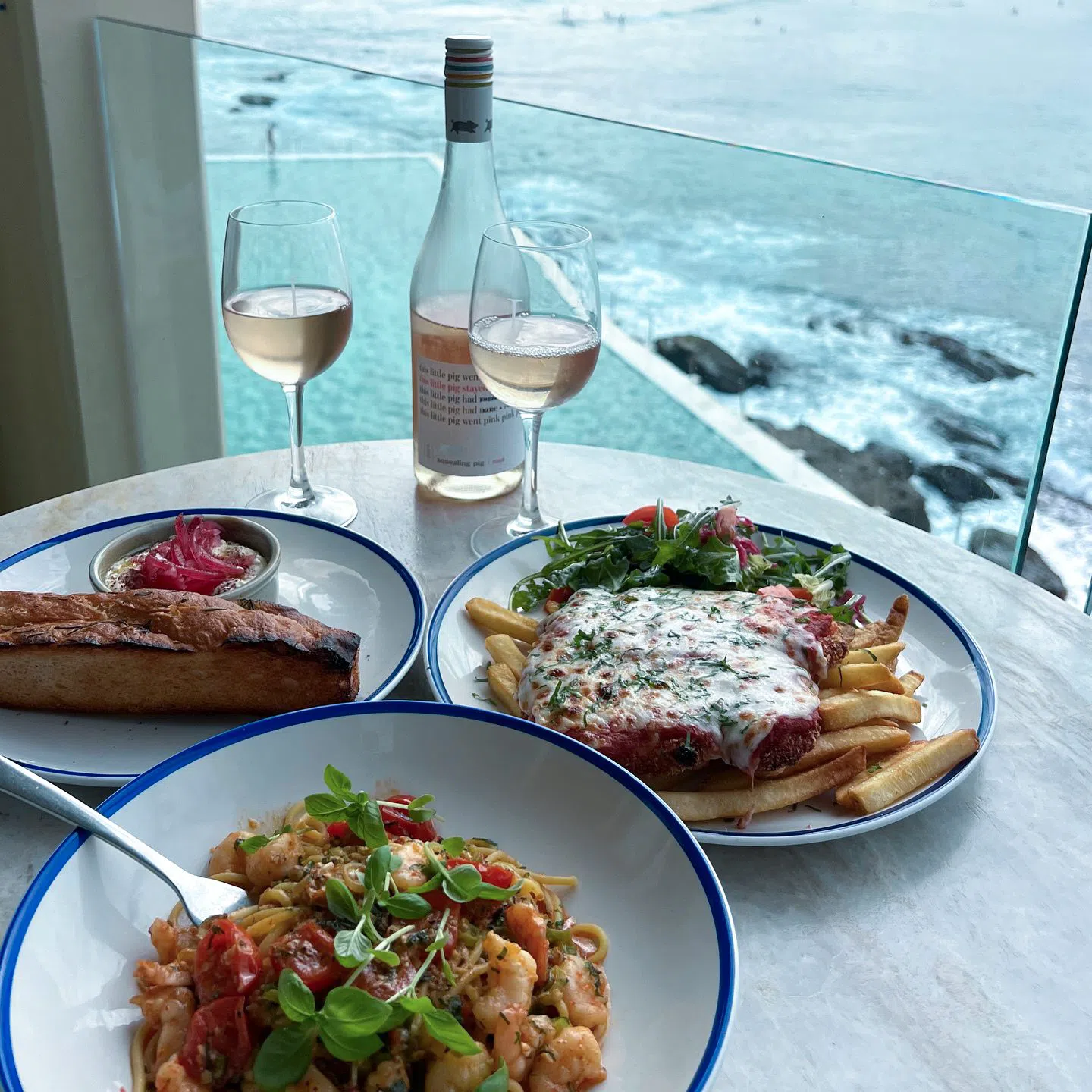
Before the city is properly awake, a certain kind of Sydneysider is already halfway down a cliff path with a towel over one shoulder, walking toward a rectangle of seawater cut into the rocks. The ocean pool is not a novelty here; it is closer to civic infrastructure, a chain of some thirty-odd tidal baths strung along the coast where the surf is too honest to swim in without respect. What follows is an attempt to sort them honestly — which are worth the trip, which suit a group and which suit a quiet couple, and which single pool on this list has a rule you must know before you arrive.
Why Sydney swims this way
An ocean pool is a simple idea executed with a century of patience. You wall off a shelf of rock at the edge of the sea, let the swell wash over the lip at high tide to refill it, and you get a place to swim laps or float on your back without being dragged off your feet by a set wave. The oldest here predate living memory, and the habit they created — the dawn swim, the year-round dip, the nod to the same faces every morning — has outlasted every fashion that came after it. Most of these pools are free and unpatrolled, which is the quiet catch: the water is real ocean, the walls are slick, and the sea decides the terms. Read the swell before you commit, especially at the exposed ones.
The city's pools cluster in three stretches, and that is the sensible way to plan a visit. The Eastern Beaches, closest to the centre, hold the famous ones. The Northern Beaches, over the harbour, are longer, calmer and less photographed. And to the south, Cronulla keeps a pair worth the train ride. Take them one region at a time.
Plan your Sydney trip
Live prices from our booking partners.
Free cancellation on many rooms. We may earn a commission when you book.
The Eastern Beaches: the famous stretch
This is the coast most international visitors picture, and it delivers, though not always in the way the postcards promise. Start with the obvious one and be honest about it.
Bondi Icebergs Pool (Bondi Beach) is the image the world already holds of Sydney: a turquoise pool at the southern end of the beach, waves breaking over the far wall, the headland behind. It is genuinely worth seeing, and the good news for a planner is that it is a straightforward public pool — anyone can pay the roughly A$9 adult entry and swim. The members' club and restaurant above it are a separate business with a separate door; you do not need to be a member, or dressed for dinner, to get in the water. The club finished a dining refurbishment in 2025, but the tidal pool stayed open through it and runs year-round. Go early or accept a crowd; by mid-morning in summer it is as busy as its fame suggests. It handles groups fine.
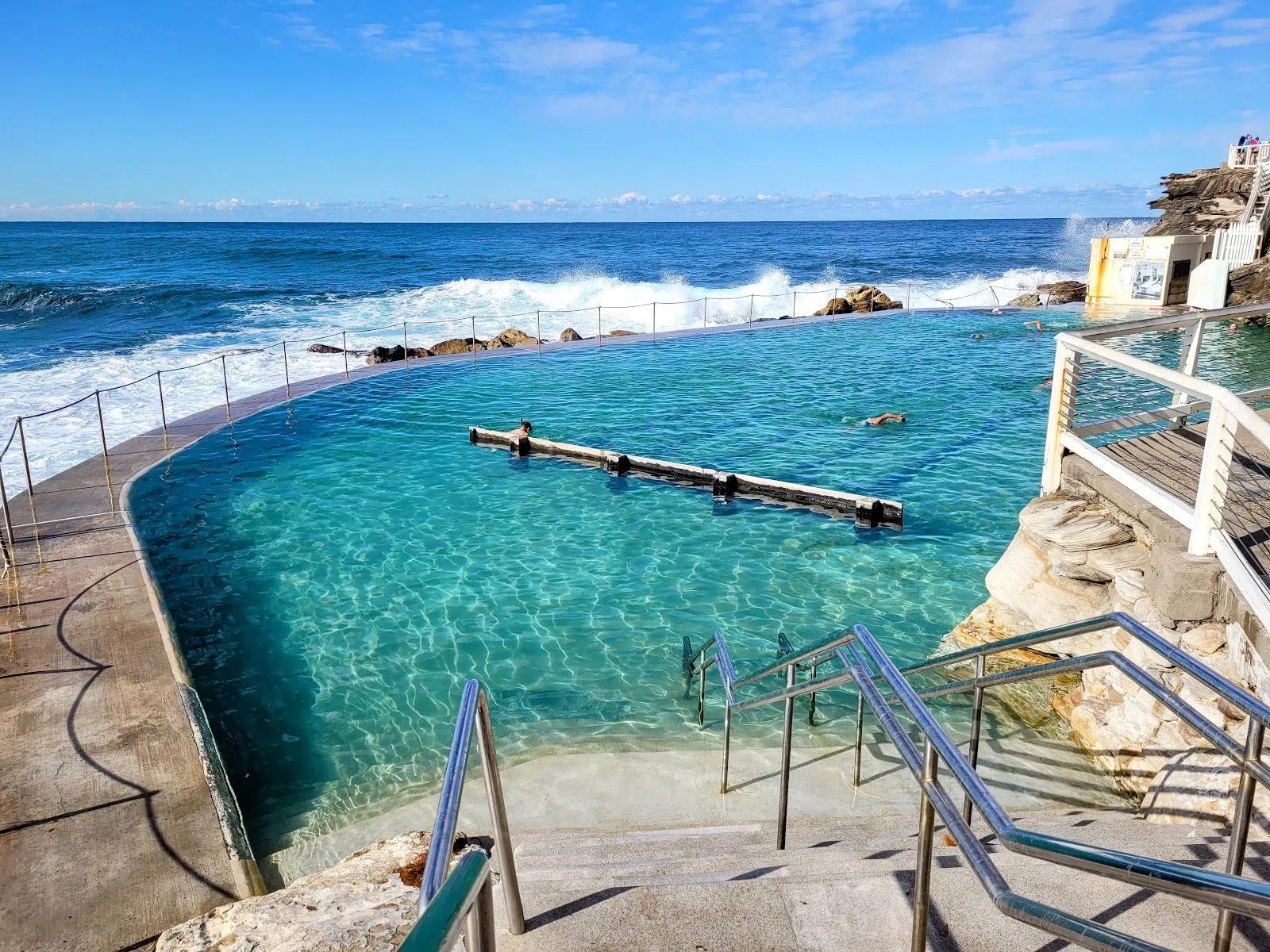
A short walk south on the Bondi-to-Coogee coastal path — one of the best urban walks anywhere — brings you to Bronte Baths (Bronte), and this is the one I would send you to if you want the ritual without the audience. It opened in 1887 and is reputed to be the birthplace of the Australian crawl, the freestyle stroke that changed competitive swimming. It is free, open-access and altogether more local in feel: fewer visitors, more regulars, the water sloshing over the rocks at the pool's seaward edge. No bookings, groups welcome. If you only have time for one Eastern Beaches pool and Bondi's fame doesn't move you, come here instead.
Carry on to Coogee, which is unusual in having a small cluster of pools within a few hundred metres, each with a distinct character. Ross Jones Memorial Pool (Coogee) sits beside the surf club and is the family pick: free, open-access, with whimsical sandcastle-style walls that make it the most photogenic of the group. It is small and gets lively in summer, so it is better for a splash with children than for serious laps.
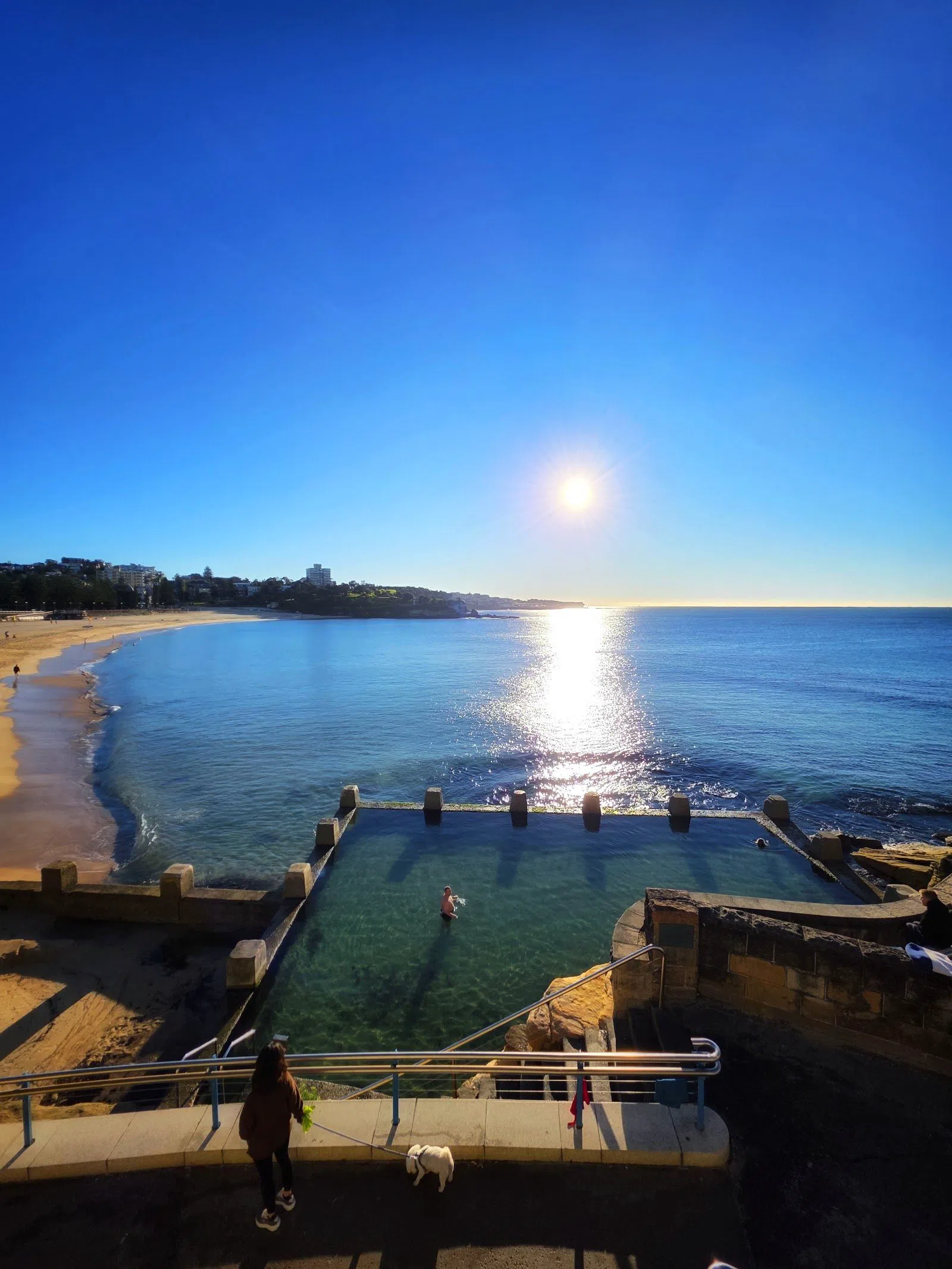
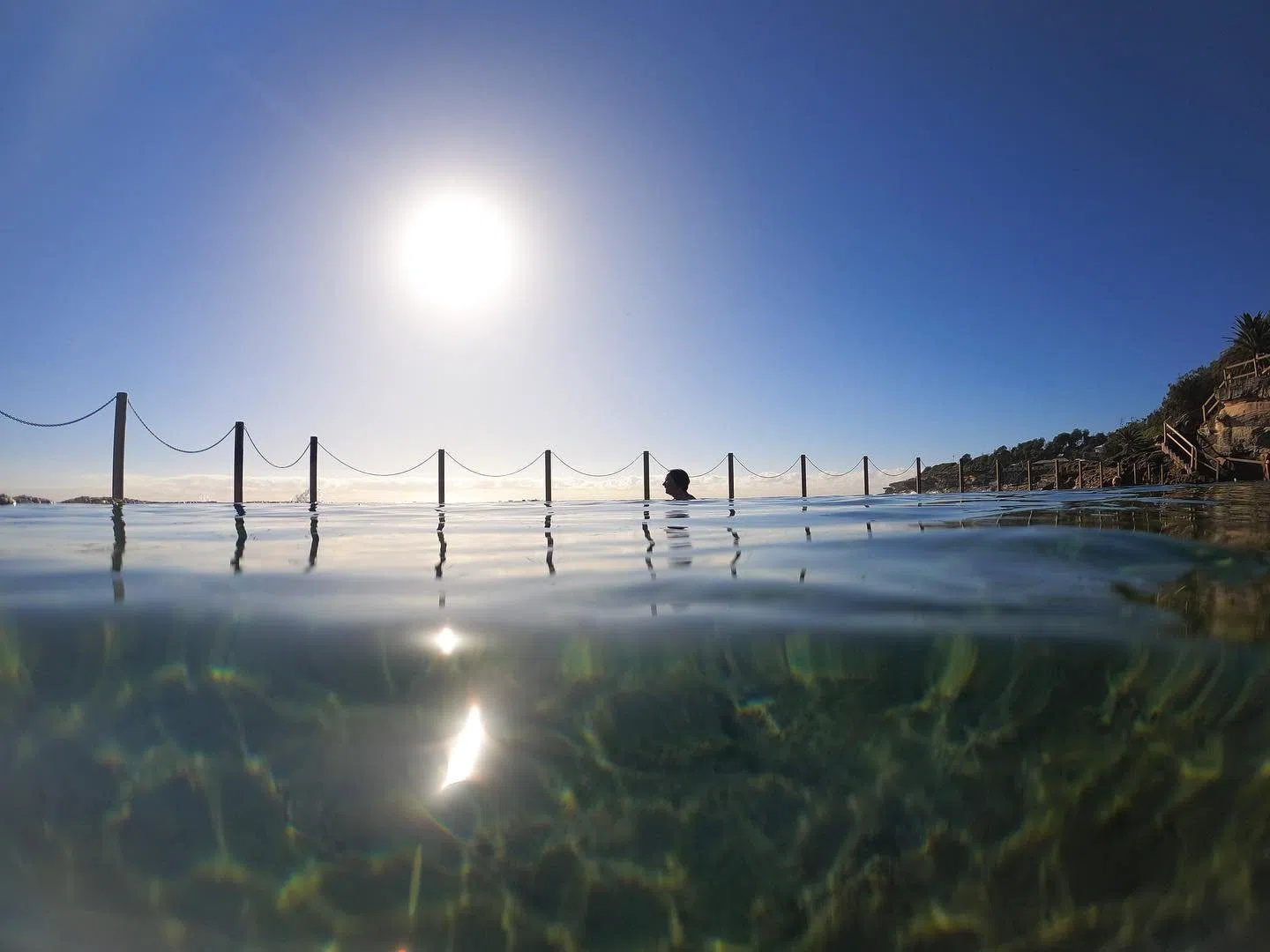
Just around the headland is the pool that needs its rule stated plainly. McIver's Ladies Baths (Coogee) is women and children only — the single hard door policy on this entire list, and men cannot enter, no exceptions. For an international audience that deserves to be said clearly so no one arrives expecting otherwise. What it is, is remarkable: Australia's last remaining women-only seawater pool, in continuous use since the 1880s, tucked into the cliff with a gold-coin honesty box (around A$2.50). For women travelling together it is a quiet, protected, unusually moving place to swim, and groups of women are welcome. For a mixed group, plan around it.
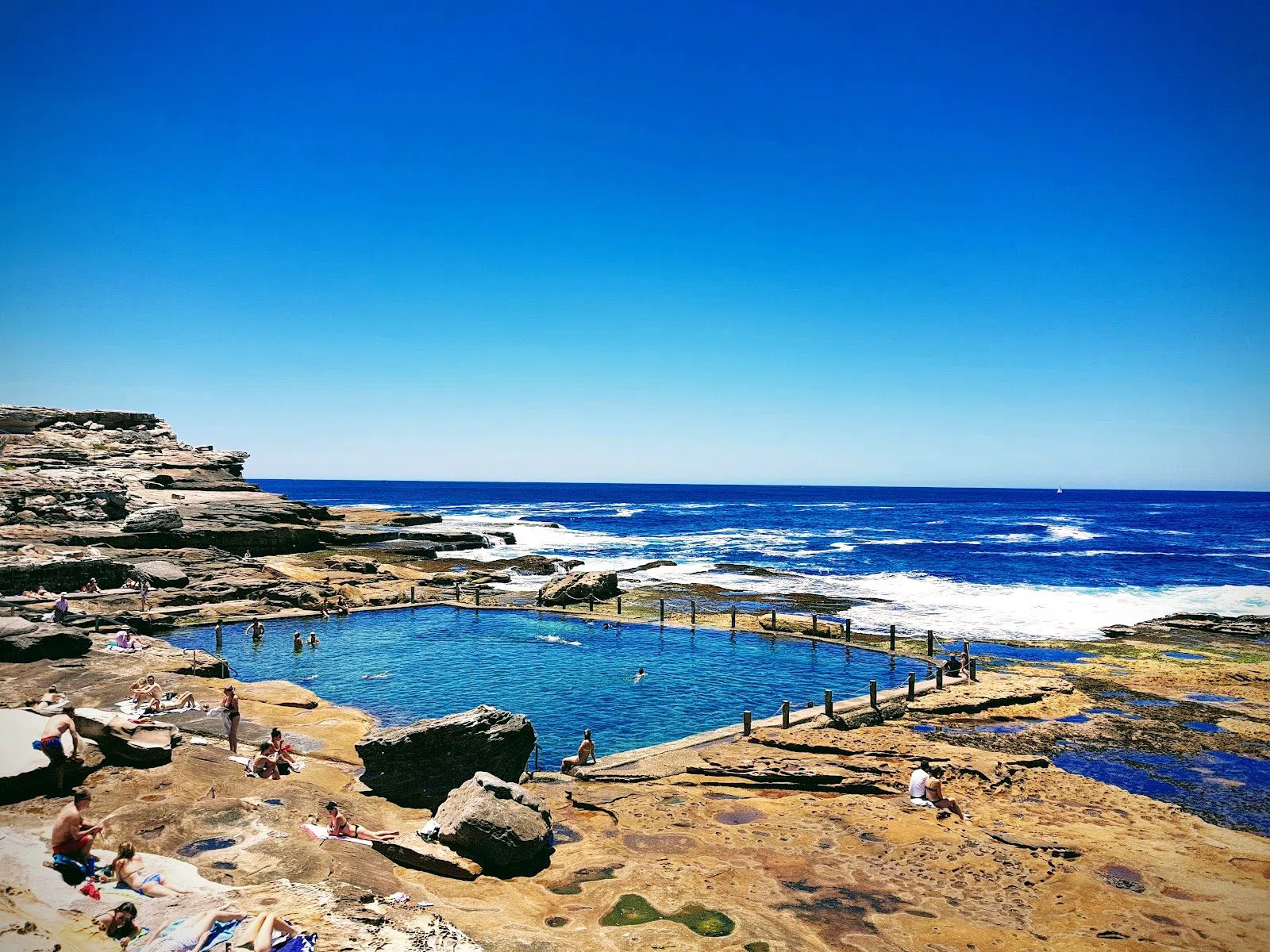
A little further along the coast walk toward Maroubra is Mahon Pool (Maroubra), the most dramatic pool near the city — an infinity edge where the water seems to pour straight into the open ocean, and in the cooler months a genuine whale-watching spot from the rocks. It is free and open-access, but it is also exposed and unpatrolled, and on a big swell the sea comes over the wall with force. This is a pool for confident swimmers who can read conditions, not for a casual first dip. On a calm morning it is one of the finest places to swim in Sydney; on a rough one, admire it from dry rock and move on.
The Northern Beaches: longer, calmer, less crowded
Cross the harbour and the coast changes register. The Northern Beaches pools are generally quieter, the water often gentler, and the whole stretch sees a fraction of the visitors the east does. If you want to swim proper laps without queuing for a lane, this is where to come.
Begin at Manly, easily reached by ferry, and walk the short waterfront path toward Shelly Beach. Fairy Bower Sea Pool (Manly) is the small triangular pool set into the walkway, marked by a set of bronze sea-nymph sculptures rising from the water — a favourite photo stop for good reason. Be clear-eyed about what it is: shallow and modest, better for a cooling dip and a picture than for laps. It is free and group-friendly, and it pairs naturally with the easy snorkel walk around Cabbage Tree Bay, which is worth doing in its own right.
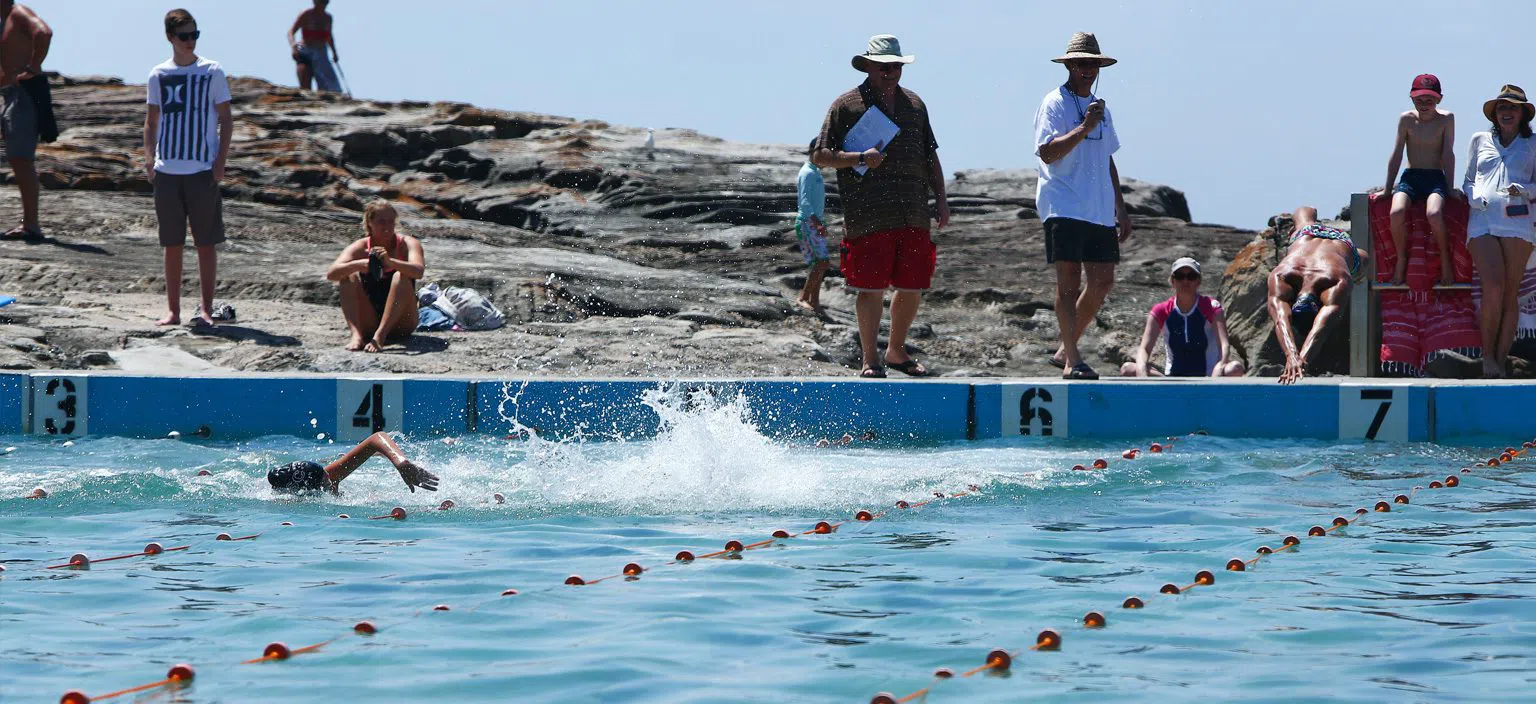
Over the hill from Manly is Freshwater Rock Pool (Freshwater), and this is the serious swimmer's pool of the northern stretch: a full 50-metre lap pool, free and open-access, set beneath a headland with a big open view. The beach here is where Duke Kahanamoku gave his famous surfing demonstration in 1915, a small but real piece of surfing history. It sees far fewer tourists than the eastern pools, which is precisely its appeal — space to swim a proper session in the morning light.
Further north, Dee Why Rock Pool (Dee Why) is the one to note if you are travelling with young children. It has a dedicated adjoining toddler pool, flat and easy access, and a row of cafes right on the promenade for afterwards — the most genuinely family-suited pool on this coast. Free, open-access, very comfortable for groups.
Between the busier beaches sits North Curl Curl Rock Pool (Curl Curl), a wilder proposition: a pool set on a sculptural shelf of rock that photographers and ocean-swimming locals prize. It is free and open-access, but exposed and unpatrolled, so treat it like Mahon — check the tide and swell, and don't go in on a big day unless you know what you're doing.
At the very northern tip of the city, Palm Beach Rock Pool (Palm Beach) sits under the Barrenjoey lighthouse, on the headland made familiar to a global television audience by a long-running soap. It is free and group-friendly, and it had a routine valve repair in 2025 but is operating normally. The honest caveat is distance: it is roughly an hour's drive from the centre, so treat it as a full day-trip out to the peninsula rather than a quick morning swim. On a clear day, with the lighthouse walk added, it earns the journey; as a swim alone, it does not.
South to Cronulla
Sydney's southern beaches get overlooked by visitors, which is their advantage. Cronulla is the end of a direct train line, and it keeps two pools worth the ride.
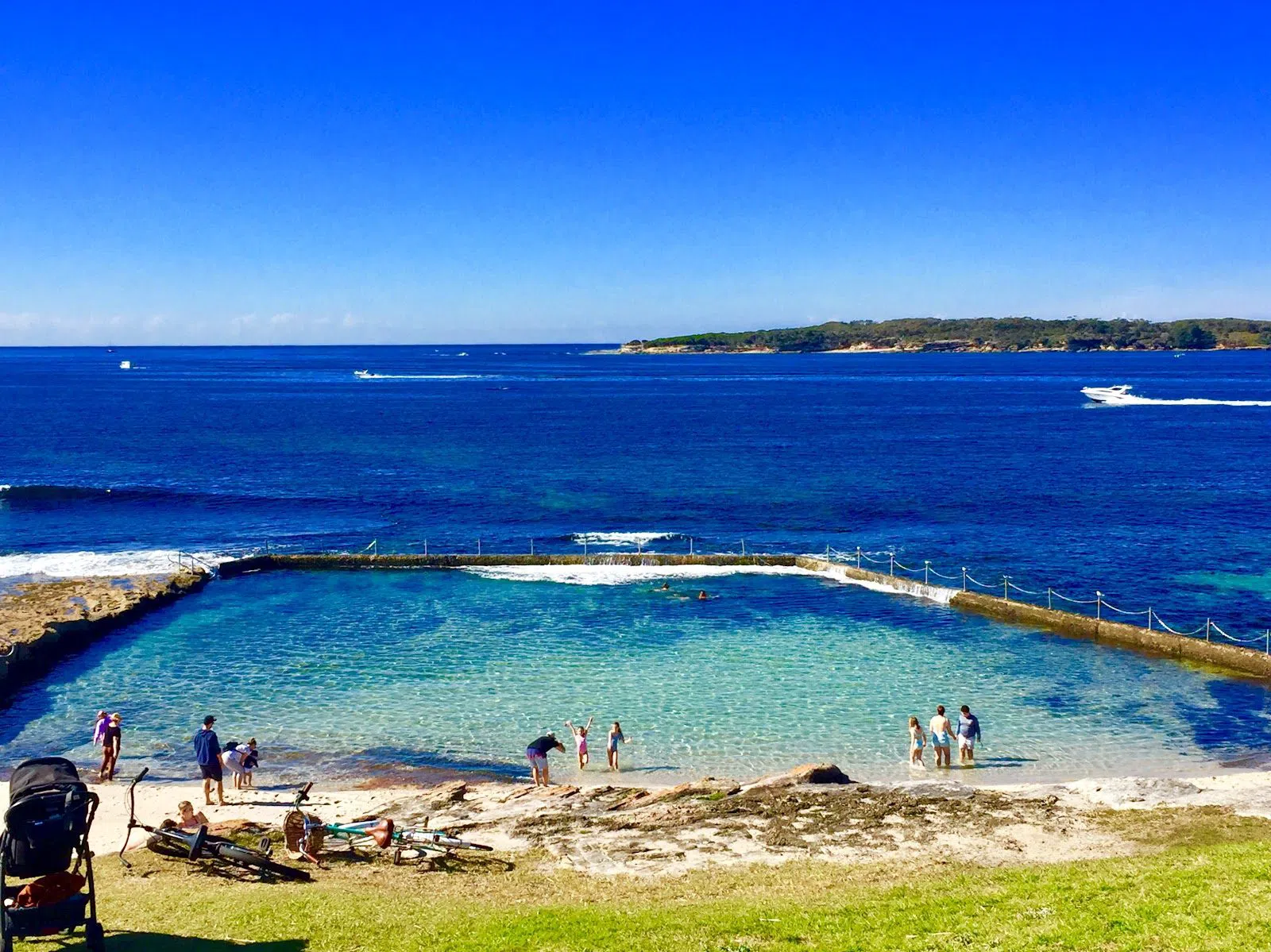
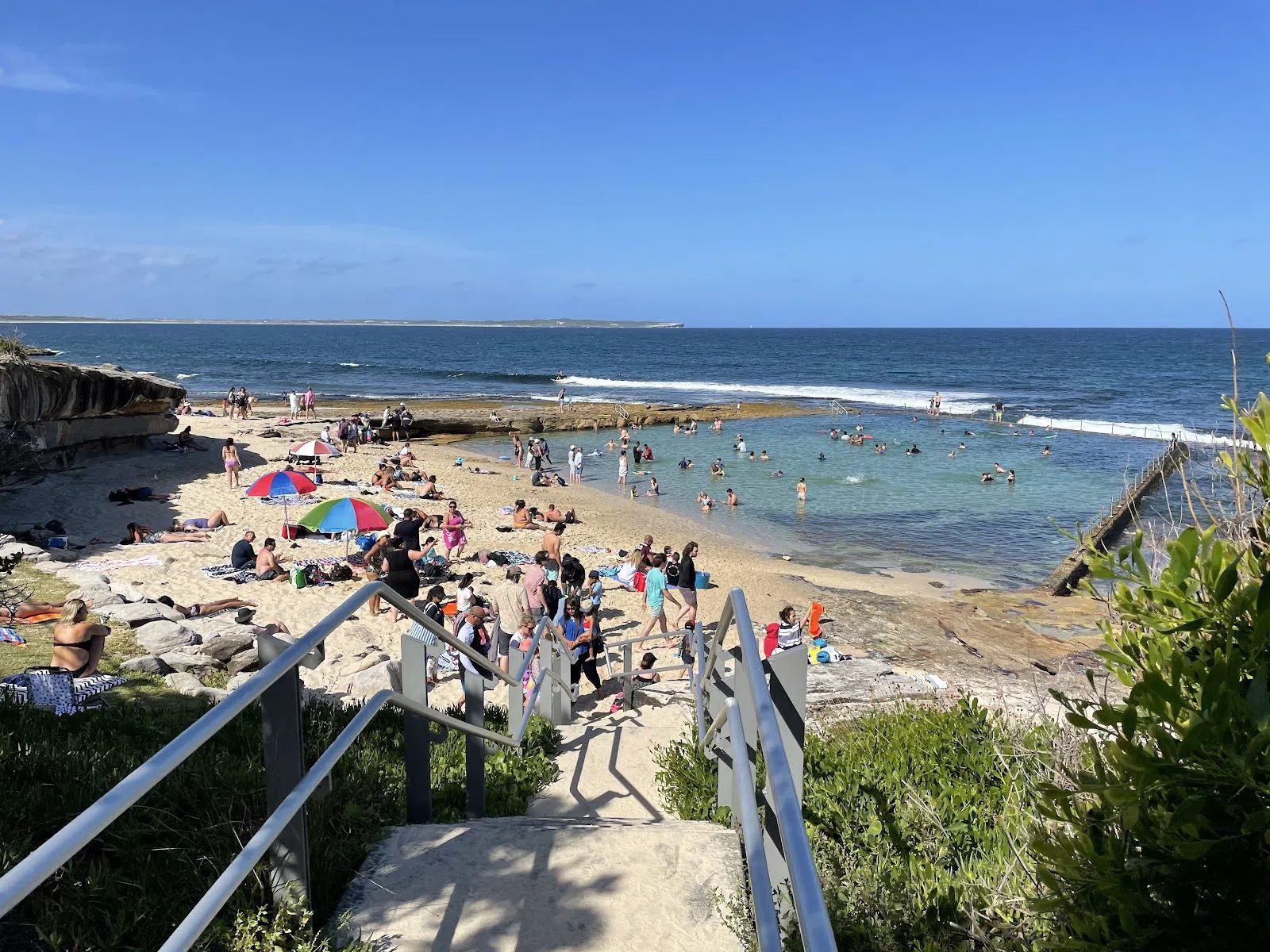
Oak Park Ocean Pool (Cronulla) is the pick of the two: a free, open-access pool with its own adjacent sandy beach and reserve, backed by national-park bushland, on the Bate Bay stretch that was named Australia's best beach for 2026. It is unpatrolled, but the setting is the most scenic of Cronulla's pools and the space around it makes it excellent for a group with a picnic. A short way along the esplanade is Shelly Park Ocean Pool (Cronulla) — and note this is a different place from Manly's Shelly Beach, a common mix-up. It is calm, shallow and convenient, which makes it a kind choice for families and less-confident swimmers, and a natural pause on the Cronulla coastal walk. Neither needs booking; both take groups easily.
Paid, free, and the one honest splurge
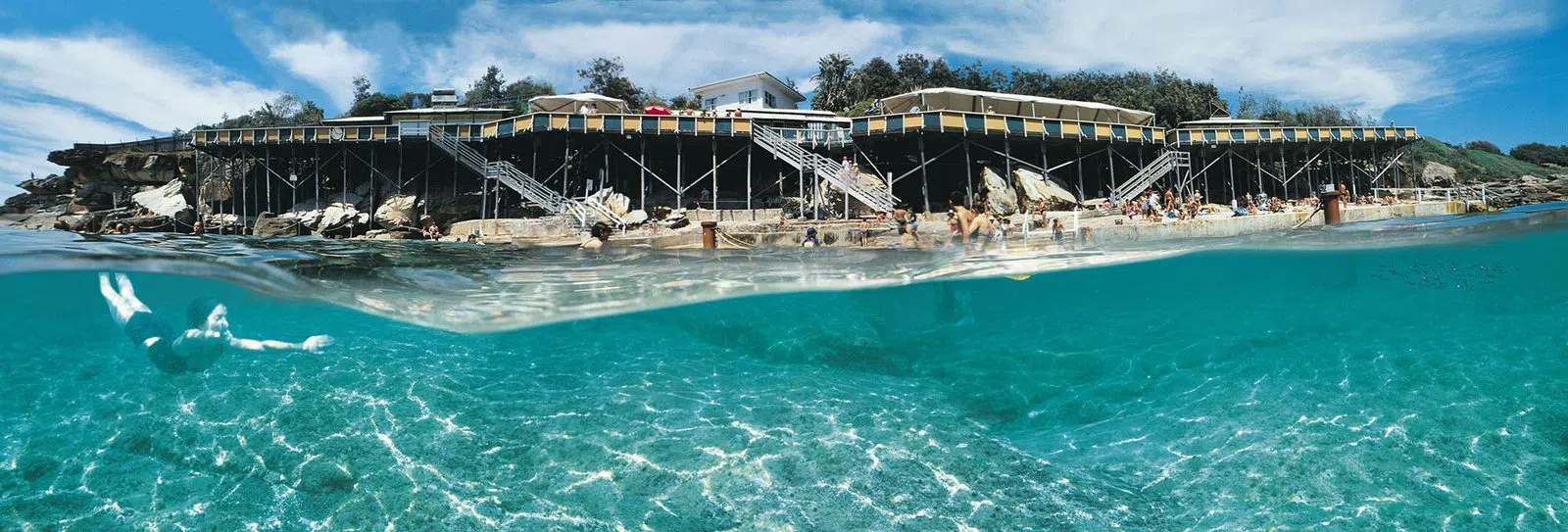
Most of these pools cost nothing, which is part of what makes the habit so democratic. Three take a fee, and the exceptions are worth understanding. Bondi Icebergs charges around A$9 for its fame and its setting. McIver's asks a gold-coin donation of about A$2.50 into an honesty box, which supports a genuinely singular place. And Wylie's Baths (Coogee) is the one paid pool I would happily pay for on the merits: a heritage mixed baths opened in 1907, entry around A$6 for an adult and A$3 concession, with the most atmospheric timber deck in the city. There is a yoga deck and a cafe, and the office sells multi-entry and group passes if you're a party or planning to return. It is not free like its neighbours, but the setting — weathered boards, the sea below, the sense of a place that has been doing exactly this for over a century — is worth the turnstile. For a group wanting somewhere to linger rather than just swim and go, it's the best value on the coast.
A note on how these suit different visitors. If you are a couple after atmosphere, Wylie's and Bronte at dawn are the ones. If you are a group, nearly every pool here welcomes you and none but McIver's turns anyone away — pick by region and picnic potential, with Oak Park and Wylie's leading. If you are travelling with children, Dee Why, Ross Jones, Shelly Park and Fairy Bower are the calm, shallow, family-first choices. And if you are a strong swimmer chasing the drama, Mahon and North Curl Curl on the right day are unforgettable, and dangerous on the wrong one.
Planning notes: transport, cash, timing, budget
Transport. The Eastern Beaches cluster is reachable from the centre by bus or a short ride to Bondi Junction and onward; the Bondi-to-Coogee coastal walk links Bondi, Bronte, Coogee and their pools on foot in a couple of unhurried hours, which is the best way to see several in a morning. For the Northern Beaches, take the Manly ferry for Fairy Bower, then buses up the peninsula for Freshwater, Dee Why, Curl Curl and — a long haul — Palm Beach. Cronulla's Oak Park and Shelly Park sit at the end of a direct train line. A tap-and-go transport card covers ferries, trains and buses across all of it.
Cash. Most pools are free. Carry a few coins regardless: McIver's runs on a gold-coin honesty box, and the paid pools (Bondi Icebergs around A$9, Wylie's around A$6 adult / A$3 concession) are inexpensive, though cards are widely accepted at the staffed ones.
Timing. Dawn is the point of the exercise, and not only for the light — the pools are calmest and least crowded before the day's wind and crowds arrive. Summer (December to February) means warm water and full pools; winter swimming is a genuine local ritual, quieter and bracing, and the cooler months are when Mahon becomes a whale-watching perch. Always check the surf and tide for the unpatrolled, exposed pools before you get in.
Budget. You could swim the whole coast for the price of your transport fares and a couple of coffees. Two paid pools and one gold-coin donation are the only entry costs on this list, and none is dear. The real expense is time and an early alarm — spend both generously.
For where to base yourself, the Eastern Beaches put you closest to the famous pools while the Northern Beaches reward a quieter, longer stay; compare options with a Sydney hotel search. For the wider city beyond the water, see our full Sydney guide.
Before you go
Are Sydney's ocean pools free to swim in?
Most are free and open-access, including Bronte Baths, Mahon Pool, Freshwater, Dee Why, Oak Park and Shelly Park. The exceptions are Bondi Icebergs (around A$9 adult entry), Wylie's Baths (around A$6 adult / A$3 concession) and McIver's Ladies Baths (a gold-coin donation of about A$2.50).
Can men swim at McIver's Ladies Baths?
No. McIver's Ladies Baths in Coogee is women and children only and men cannot enter — it is Australia's last remaining women-only seawater pool, in continuous use since the 1880s. It is the one hard door policy among Sydney's ocean pools, so plan around it if you are travelling in a mixed group.
Which Sydney ocean pool is best for families with young children?
Dee Why Rock Pool is the standout, with a dedicated adjoining toddler pool, flat easy access and promenade cafes. Ross Jones Memorial Pool at Coogee, Shelly Park at Cronulla and the shallow Fairy Bower Sea Pool at Manly are also calm, gentle choices for children.
Do I need to book, and can I bring a group?
None of these pools require bookings, and nearly all welcome groups. The free public pools have open access; Wylie's Baths sells multi-entry and group passes through its office. The only access restriction is McIver's, which is women and children only.
When is the best time to visit Sydney's ocean pools?
Dawn, for the calmest water and smallest crowds. Summer (December to February) brings warm water; winter swimming is a hardy local ritual and the cooler months are when Mahon Pool doubles as a whale-watching spot. Always check the surf and tide before entering the unpatrolled, exposed pools like Mahon and North Curl Curl.